
What Is a Hudson County Court Docket
A docket is a list. It records every filing and event in one case, in order, by date. Think of it as the table of contents for a case file. The full file holds the actual documents, like the complaint, the answer, motions, orders, and judgments. The docket just lists that those things happened and when. So a Hudson County court docket lets you track a case without reading every page. You see the complaint filed, the answer filed, motions, hearing dates, and the final judgment. Each line is one event. The docket also carries the case number, the parties, the venue, and the assigned judge.
People mix up the docket with the docket number. They are not the same. The docket number is the unique ID for the case. The docket is the event log under that number. In New Jersey, the docket number usually starts with a division prefix that tells you the case type. Civil Law Division cases use L. Special Civil uses DC. Landlord-tenant uses LT. Foreclosure uses F. Family matters use prefixes like FM for matrimonial and divorce, FV for domestic violence, and FG, FA, FD, or FO for other family dockets. Criminal cases use complaint and indictment formats instead. So the prefix is a quick clue to what court division holds the case.
Hudson County dockets live in the state court system, not a county-built site. Civil and municipal dockets differ a lot. A civil docket can run for years with dozens of entries. A municipal traffic docket may show only a ticket, a plea, and a payment.
How to Find Hudson County Court Dockets Online
Docket searching starts with the New Jersey Courts Find a Case page. It is a launchpad, not one big database. It sends you to a separate public search tool for each case type. Civil suits and foreclosures use the civil and foreclosure case jacket. Municipal traffic and complaint matters use the Municipal Court Case Search or NJMCDirect. Pick the tool that matches your case before you start. A traffic ticket is not in the same system as a civil lawsuit.
- Open Find a Case and pick the right portal for your matter. Civil and foreclosure dockets use the case jacket. Municipal tickets and complaints use Municipal Court Case Search or NJMCDirect. Criminal, judgment lien, tax, and Supreme Court searches each have their own link.
- Choose the court type. A civil suit over $20,000, a foreclosure, a landlord-tenant case, or a family matter starts in the Superior Court tools. A local traffic ticket starts in the municipal tools.
- Enter a docket number if you have one. This is the most exact search. Use the division prefix format, such as L, DC, LT, or F, when the portal asks for it.
- Search by party name when the case number is unknown. Use exact spelling first, then try other spellings, since the same name can appear more than one way.
- Open the case and review the docket entries. Each line shows a date and an event. When a document is not online, the Judiciary has a request process for copies.
Federal dockets work differently. Cases in the U.S. District Court for the District of New Jersey post on PACER, the federal docket system. PACER charges a per-page fee unless a waiver applies. The Federal Judiciary runs the PACER public access portal for these dockets and documents.
The lead-in points to the official federal docket portal. Its public search screen is shown below.
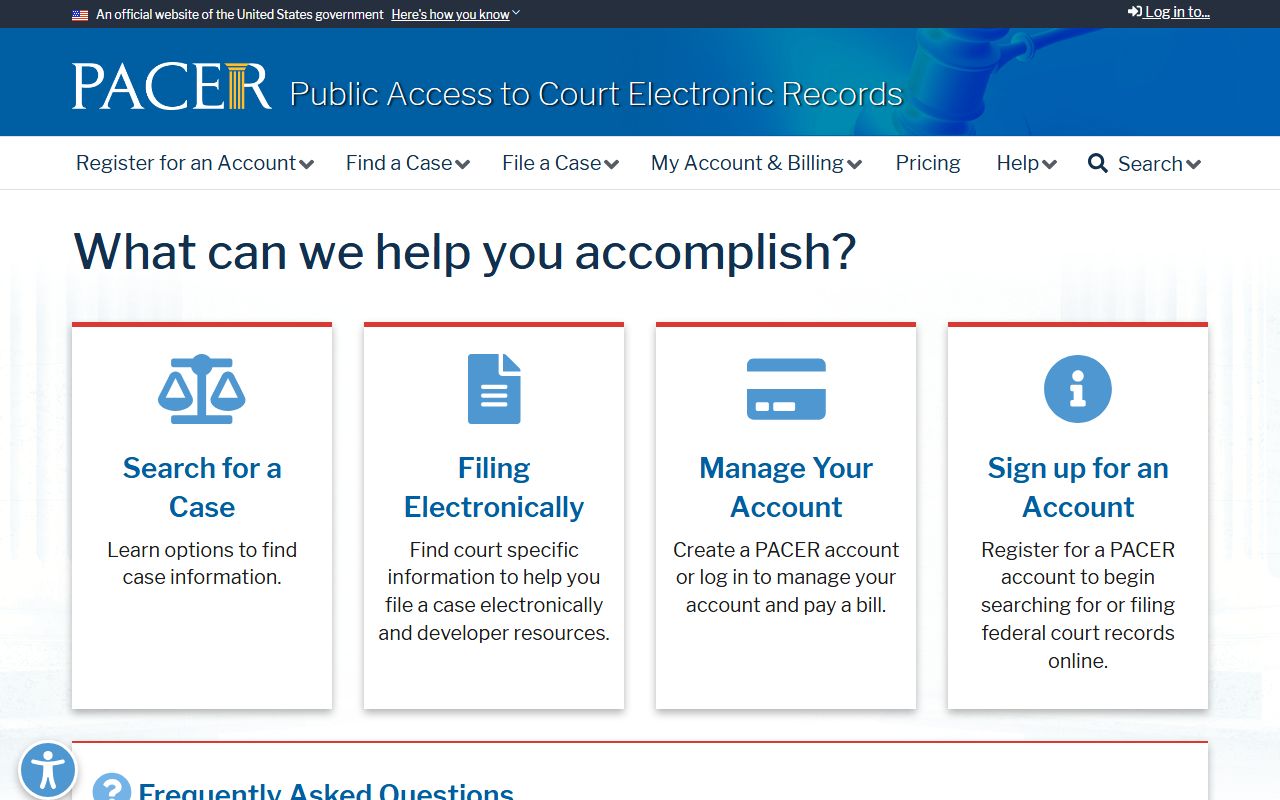
That portal is where federal civil and criminal dockets from Hudson County appear once a case is filed in district court.
Sample Hudson County Docket Entry
A docket entry reads as a short line with a date and an event type. Each line marks one step in the case. Over time these lines build a full timeline, from the first filing to the final judgment. The fields below show what a typical Hudson County docket entry includes and what each part tells you.
| Field | What It Shows |
|---|---|
| Entry Date | The date the filing or event was logged. |
| Event Type | The action, such as complaint filed, answer filed, motion filed, order entered, hearing scheduled, judgment, warrant, notice of appeal, or satisfaction of judgment. |
| Party Filing | The party or attorney who submitted the filing. |
| Document Link | A link to the document where it is public and posted online. |
Common events repeat across case types. A civil case may show a complaint filed, an answer filed, a motion filed, an order entered, a hearing scheduled, and a judgment. A foreclosure docket can add a writ. A case that resolves a debt may close with a satisfaction of judgment. If a party appeals, the docket adds a notice of appeal. So the entry list is the heartbeat of the case.
Courts That Publish Hudson County Dockets
New Jersey is one court system with several divisions, and Hudson County sits in the Hudson Vicinage of the Superior Court. Each division handles its own kind of case, and the docket lives with that division. The list below shows where Hudson County dockets come from and what each court handles.
- Superior Court Civil Law Division: lawsuits over $20,000, plus motions, orders, and judgments on the civil docket.
- Special Civil Part: smaller money claims, collections, and landlord-tenant matters with shorter dockets.
- Superior Court Criminal Division: indictable cases, with complaint, indictment, plea, and sentencing events.
- Family Division: divorce, custody, child support, and domestic violence, with many entries kept off public view.
- Municipal courts: traffic tickets, ordinance cases, and disorderly persons complaints, searched through Municipal Court Case Search or NJMCDirect.
Not every docket is fully open. Family and juvenile dockets carry heavy limits under court rule. Some entries appear while the documents stay sealed. Federal dockets from Hudson County sit in the District of New Jersey CM/ECF system and post copies through PACER. A free option exists too. CourtListener mirrors many federal dockets and opinions at no cost, though it is not the official record.
The lead-in points to a free archive of federal dockets and opinions. Its docket search page is shown below.
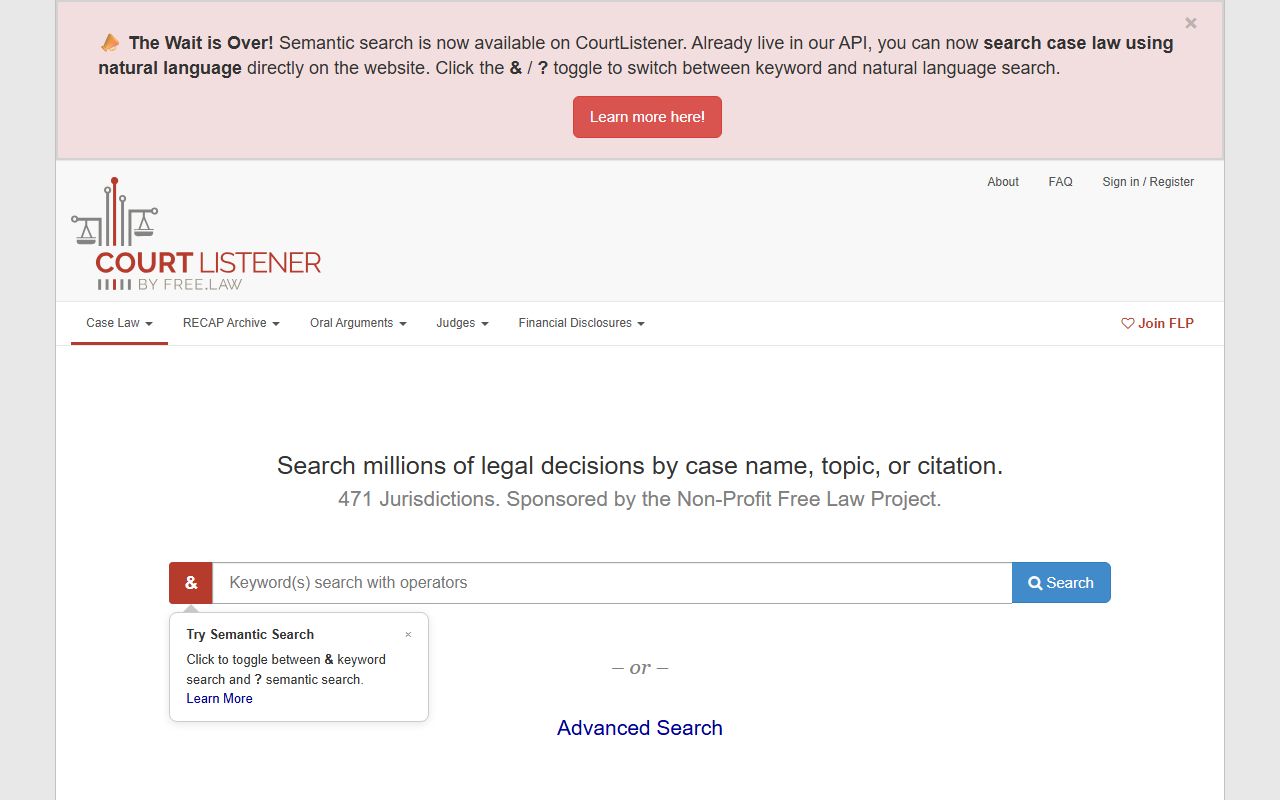
That archive can help when PACER fees are a concern, but always confirm against the official docket for anything that matters legally.
Docket vs. Full Case Record
A docket and a full case record are not the same thing. The docket is the list of events. The full case record holds the actual documents behind those events. You read a docket to track progress. You pull the full record when you need the text of a motion, an order, or a judgment. The table below lays out the main differences.
| Docket | Full Case Record | |
|---|---|---|
| Format | List of dated entries | Full documents and filings |
| Access | Often online, fast to view | May need a request, fee, or visit |
| Use | Track case progress and dates | Legal review, evidence, copies |
For the document side of a case, the full Hudson County court records page breaks down what a case jacket holds and how to request copies that are not online. The docket points the way. The record fills in the detail.
How to Read a Hudson County Docket
Docket entries use short labels and a few legal terms. Knowing the basics makes the timeline easy to follow. A few terms come up again and again on Hudson County dockets.
- Complaint
- The document that starts a civil, criminal, or municipal matter.
- Motion
- A request asking the judge to take some action in the case.
- Order
- A written direction issued by the judge.
- Disposition
- The current or final outcome of a charge or case.
- Judgment
- The court's final decision or enforceable ruling.
- Satisfaction of Judgment
- A filing that shows a judgment has been paid in full.
Status words tell you where a case stands. You may see open, closed, disposed, dismissed, or judgment entered. A case dismissed with prejudice cannot be refiled on the same claim. A case dismissed without prejudice may be refiled if allowed. Criminal dockets add events like arraignment, plea, and sentence. Watch for a bench warrant entry too, which a judge can issue after a missed appearance.
Docket numbers themselves carry meaning in New Jersey. The prefix points to the division. An L prefix marks a Civil Law Division case. DC marks a Special Civil case. LT marks a landlord-tenant case. F marks a foreclosure. Family dockets use FM for matrimonial and divorce, FV for domestic violence, and FG, FA, FD, or FO for other family categories. Criminal cases use complaint and indictment formats instead of a single letter. So before you even open a case, the docket number hints at which court and which kind of matter you are about to read.
For criminal docket events and how charges move through the system, the Hudson County arrest records page covers booking and charges. For the court structure behind every docket, the Superior Court page maps the divisions, and the Clerk of Court page explains copy requests. The FAQ answers common docket questions.
Note: A docket shows that an event happened, but many documents behind those events stay sealed or require a separate request to view.