
What Hudson County Probate Records Cover
Probate records track how a person's estate is handled after death. In Hudson County these records include wills, applications for probate, administration papers, letters testamentary, short certificates, inventories, accountings, caveats, and guardianship filings for minors. Most of this paperwork starts at the county Surrogate. The Surrogate is the office that qualifies an executor or administrator, admits a will to probate, and issues the certificates a fiduciary needs to act for an estate. When a person dies with a will, the named executor begins the process here. When there is no will, the next of kin may apply for administration instead.
Not every probate matter stays at the Surrogate. Routine, uncontested estate work is the Surrogate's job. But a contested will, a caveat, a formal accounting dispute, or an adult guardianship over an incapacitated person is handled by the Superior Court Chancery Division, Probate Part. So Hudson County probate records live in two places. Knowing which office holds the file helps you find the record and ask the right staff for a copy.
Hudson County Probate Records Terms
Probate filings use words that trip up many people. A short glossary helps before you read a will file or talk to Surrogate staff. These five terms come up in most Hudson County estate matters.
- Testator
- The person who made the will. After death, the testator's will is the document the Surrogate reviews for probate.
- Executor
- The person named in the will to carry it out. The executor qualifies at the Surrogate and gets letters testamentary to act for the estate.
- Intestate
- Dying without a valid will. When this happens, next of kin may apply for administration, and New Jersey law sets who has priority.
- Guardianship
- A court arrangement giving one person legal authority over another, such as a minor or an incapacitated adult, or over that person's affairs.
- Conservatorship
- A court arrangement to manage the property and finances of someone who needs help but is not fully judged incapacitated.
How to Search Hudson County Probate Records
There is no single open online portal that lists every Hudson County estate file. Probate searches usually start with a phone call or visit to the Surrogate. Bring the decedent's full legal name and, if you have it, the date of death and any estate or docket number. Staff can confirm whether an estate was opened and how to get copies. For contested matters that moved to the Superior Court, the file is a court record and follows the Judiciary's records process. Guardianship resources are explained by the Judiciary as well, which is handy when the matter involves a minor or an incapacitated adult.
- Gather the decedent's full legal name and alternate spellings, the date of death, and the municipality of residence. These narrow the search fast.
- Contact the Hudson County Surrogate to confirm an estate exists and to ask how copies are issued. Use the estate or docket number if you already have one.
- For a contested will, caveat, or adult guardianship, ask whether the matter is in the Superior Court Chancery Division, Probate Part, and request the file through the court instead.
The New Jersey Judiciary keeps a public help page on guardianship that walks through who may serve and how the court reviews these matters. The official NJ Courts guardianship help page is a good starting point for incapacity and minor-guardian questions tied to Hudson County estates.
That page sits on the same Judiciary site you will use for court-side probate filings.
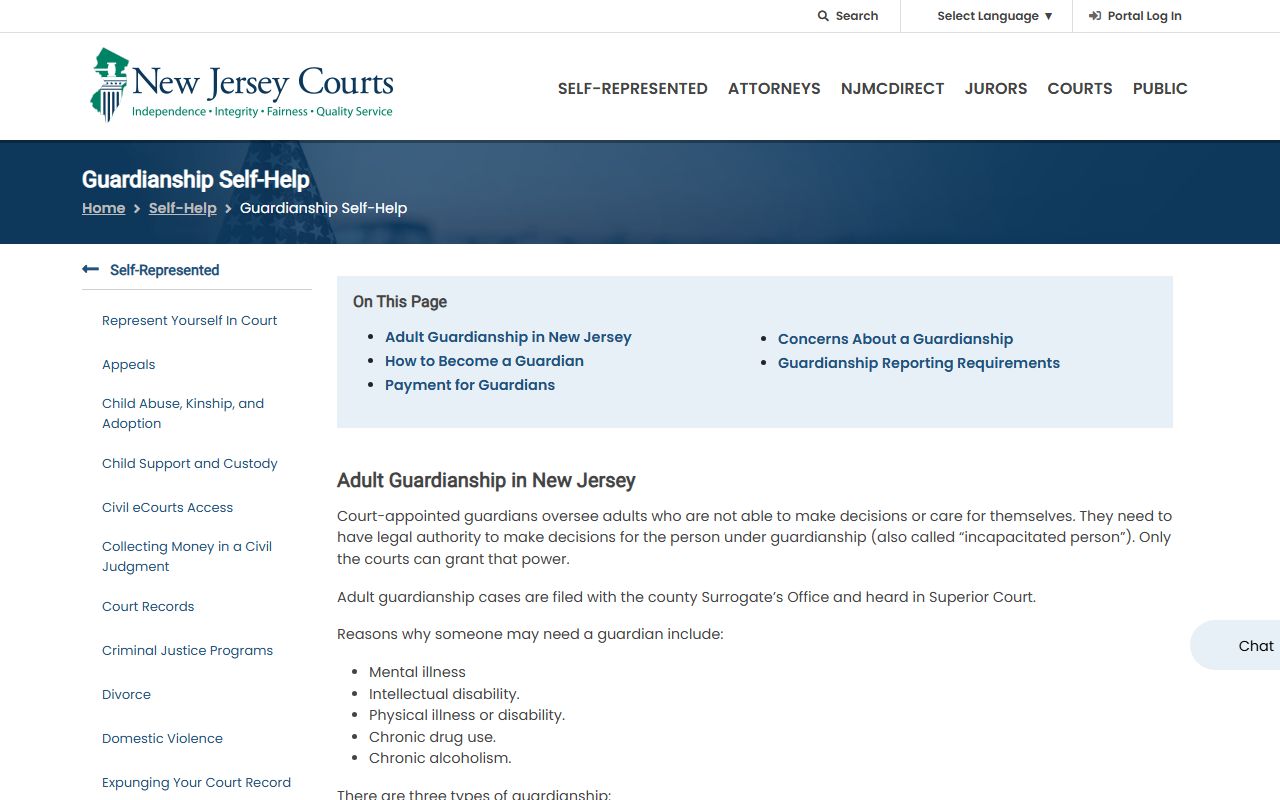
The guardianship page explains the court role that backs up many Hudson County probate and incapacity filings.
Where Hudson County Probate Records Are Held
The Hudson County Surrogate is the front door for probate. Tilo E. Rivas serves as Surrogate, and the office handles probate of wills, administrations, short certificates, guardianships of minors, and estate searches. Contested estates and adult guardianships go to the Superior Court Chancery Division, Probate Part, in the Hudson Vicinage. The contact card below is the office most people will deal with first.
Hudson County Surrogate (Tilo E. Rivas)
595 Newark Avenue, 4th Floor, Room 407
Jersey City, NJ 07306
201-795-6378
Mon-Fri, 8:30 a.m.-4:30 p.m.
For court-supervised probate disputes, the Hudson Vicinage handles Chancery Division, Probate Part matters at the Newark Avenue court complex. The assignment judge for the vicinage is David B. Katz. A caveat against a will, a contested accounting, or an incapacity hearing is the kind of matter that lands there rather than at the Surrogate counter.
The Hudson County Probate Process
Probate follows a fairly set path in New Jersey, and the Surrogate guides each step. The goal is to confirm a will, appoint someone to act, pay debts and taxes, and pass property to the right people. The steps below show the usual order for a Hudson County estate.
- Determine whether the decedent left a will.
- Gather the original will, a certified death certificate, an asset list, next-of-kin information, and the executor's or administrator's ID.
- Contact the Surrogate for the appointment process and the office fees.
- If the will is accepted, the executor qualifies and receives letters testamentary and short certificates.
- If there is no will, next of kin may apply for administration; priority follows New Jersey law.
- The fiduciary identifies assets, pays debts and taxes, notifies beneficiaries, handles creditor claims, and distributes property.
- Disputes, caveats, incapacity issues, or contested accountings may require Superior Court action.
Short certificates deserve a note. Banks, brokerages, and other holders often ask for these to release a decedent's assets. The Surrogate issues them once an executor or administrator qualifies, and many estates need more than one.
Hudson County Probate Records Search Fields
When you ask the Surrogate to locate an estate, a few key pieces of information drive the search. The table below lists what staff typically use to find a Hudson County probate matter. The decedent's name is the anchor, but a date of death or estate number speeds things up.
| Field Label | Type | Required | Notes / Format |
|---|---|---|---|
| Decedent Name | Text | Yes | Full legal name and alternate spelling. |
| Date of Death | Date | No, but important | Helps locate the estate. |
| Docket / Estate Number | Text | No | Best identifier if known. |
| Municipality / Residence | Text | No | Helps confirm the correct county. |
| Record Type | Checkbox / Dropdown | No | Will, administration, guardianship, short certificate, accounting. |
Note: the Surrogate advises using all possible spelling variations of a name, since older estate files can carry a name in more than one form.
What Hudson County Probate Records Show
A Hudson County probate file gathers the documents that prove who runs an estate and how it is settled. The exact contents depend on whether there is a will and whether the matter is contested. Most files share a common core of fields that identify the estate, the fiduciary, and the key dates.
| Field | What It Shows |
|---|---|
| Estate Name / Decedent | The deceased person whose estate is being settled. |
| Date of Death | The date that opens the estate timeline. |
| Docket / Estate Number | The unique identifier the Surrogate assigns. |
| Fiduciary Name and Role | The executor or administrator and what they are authorized to do. |
| Will and Probate Dates | When the will was made and when it was admitted to probate. |
| Letters / Short Certificates | The authority documents issued to the fiduciary. |
| Beneficiaries / Next of Kin | Heirs or named takers, where public. |
| Caveats / Contests | Any challenge filed against the will or the estate. |
Inventories, accountings, and distribution records may also appear, especially in larger or supervised estates. Guardianship and incapacity records carry more limits and may not be open.
Hudson County Probate Records Fees
The Surrogate charges fees for probate, qualification, short certificates, and copies. Exact amounts were not published in the official sources reviewed for this page, so confirm current fees with the Surrogate before you go. Checks for county recording work elsewhere are made payable to the Hudson County Register, but the Surrogate sets its own probate fees, so ask the office directly. If cost is a barrier, the Judiciary offers a fee waiver for people who qualify.
The New Jersey Judiciary publishes a fee waiver process for litigants who cannot afford court fees. The official NJ Courts fee waiver page explains who may qualify and how to apply.
That page is the right resource when a contested probate matter moves into the Superior Court and filing fees apply.
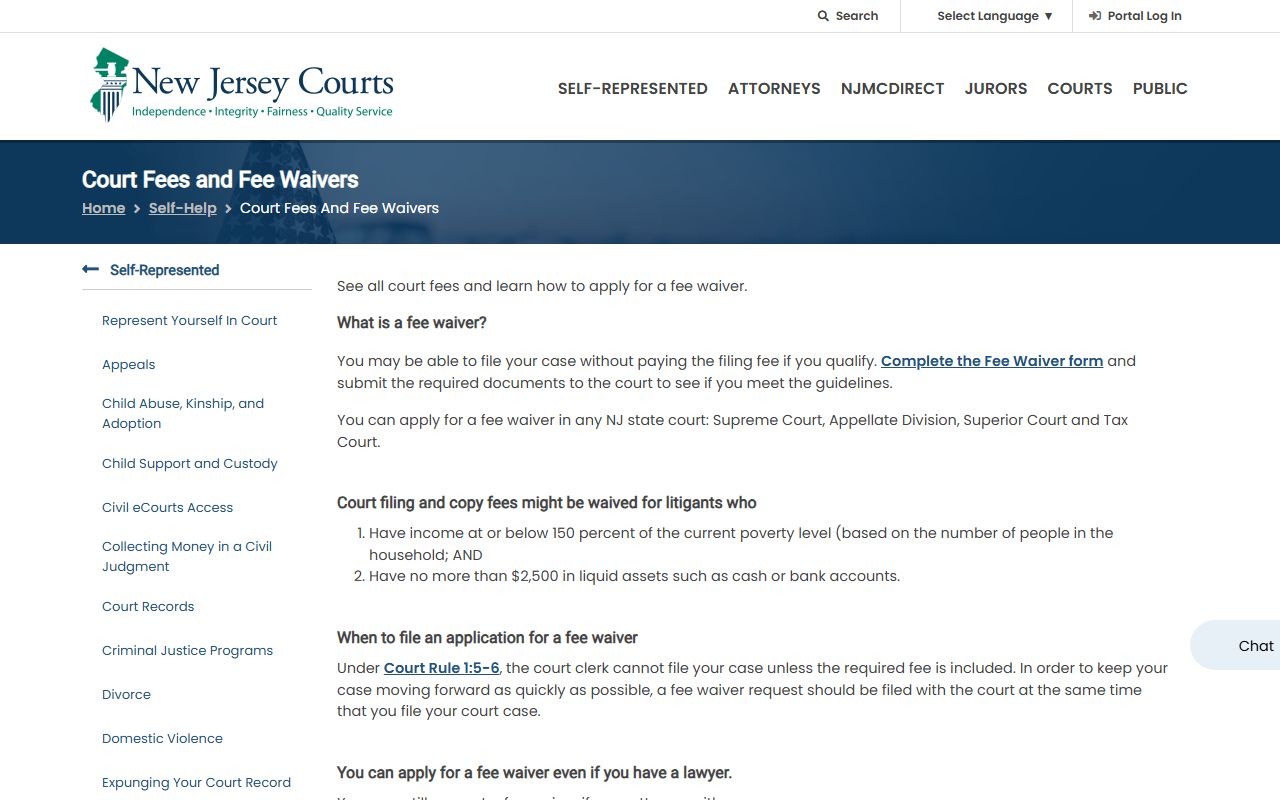
The fee waiver page helps Hudson County residents who face court-side probate costs they cannot pay.
Note: Surrogate probate fees were not located in official online sources, so call the office to confirm current amounts before paying.
Restricted Hudson County Probate Records
Most probate filings are open, but some are not. Guardianship and incapacity files often hold medical and financial details, so public access is limited. Adoption records connected to estate matters are sealed under N.J.S.A. 9:3-52 unless a court orders otherwise. Records that contain confidential personal identifiers are redacted under Court Rule 1:38-7, so Social Security numbers and financial account numbers should not appear in a public file.
If a probate record you want is restricted, the path forward is usually a court request with a stated reason. The Surrogate or the Probate Part can explain what is open and what needs a judge's order.